Motorcycle, RV, boat: why it isn’t a line on your car policy
3 min
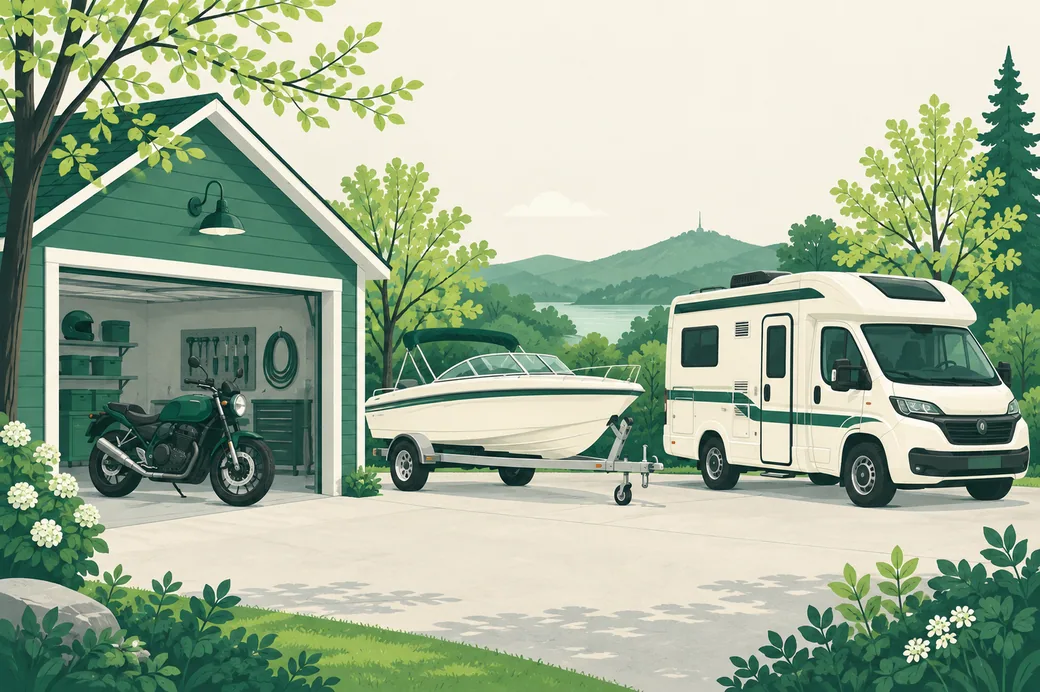
The bike comes out once the asphalt is dry, the RV leaves at the start of summer, the boat goes in when the water is decent. Three vehicles, three seasons, and three separate policies. That’s the first thing that surprises people: a recreational vehicle doesn’t get added to your car insurance like a second car.
One policy per vehicle, and it makes sense
Your car policy is built for a vehicle that runs all year, every day, in traffic. A motorcycle, an RV and a boat each have their own risk profile, their own season, their own kinds of damage and their own kind of driver. One insurer can cover all three, often with a discount when everything sits in the same place, but each vehicle keeps its own policy, its own coverage and its own deductible.
The season changes the rules
This is where it gets interesting. For a good part of the year your vehicle doesn’t move: it’s in storage. Plenty of policies allow for exactly that, a storage period where the on-the-road coverage drops away while theft, fire and damage stay in place. You pay less during those months without being uncovered. The difference between that and “I cancel it for the winter” is enormous, and that’s what the last section is about.
What doesn’t drive but still costs
- The helmet, the suit, the boots and the gloves, rarely covered without an endorsement.
- Accessories added after the purchase: windshield, hard cases, exhaust, electronics.
- The trailer, which counts as a separate vehicle in plenty of policies.
- What’s inside the RV: bedding, dishes, tools, whatever you leave in it between trips.
- The outboard motor, which can be declared separately from the hull.
The motorcycle
Your car record doesn’t carry over whole. What counts is your motorcycle experience: how long you’ve held that licence class, the engine size, the type of machine. A sport bike and a touring bike aren’t compared the same way. Theft coverage is often the most discussed piece of the policy, because a bike spends a good share of its life parked, and because it goes fast when it goes.
The RV
An RV is two things at once: a vehicle and a home. So there’s the road side — liability, collision, towing rated for the weight — and the home side: the contents, the awning, and your liability while it’s parked at a campground with people all around. If you live in it part of the year, say so. It changes the coverage you need, and it doesn’t get added on after the fact.
The boat
The policy usually follows three things: the hull, the motor and the trailer. It also spells out a navigation area, and going outside it can leave you with no coverage. Civil liability is the piece not to underestimate on the water, because an accident quickly involves another boat, a swimmer or a dock. And storage comes with its own conditions: where, how, on what.
Cancelling for the winter and re-insuring in the spring is not the same thing as storing.
The winter cancellation trap
Cutting the policy for the winter looks like a smart move right up until the garage catches fire, the basement floods or someone walks into the shed. With no policy, there’s nobody for that. And there’s the sneakier effect: an interruption puts a gap in your insurance history, and a continuous history is one of the things an insurer looks at when it sets your premium. Storage exists precisely to avoid both.
Motorcycle, RV, boat, snowmobile, ATV: every vehicle has its own coverage and its own storage conditions. Answer a few questions, a specialist calls you back, and they look with you at what you need based on what you own and how you use it: get a quote for your recreational vehicles.